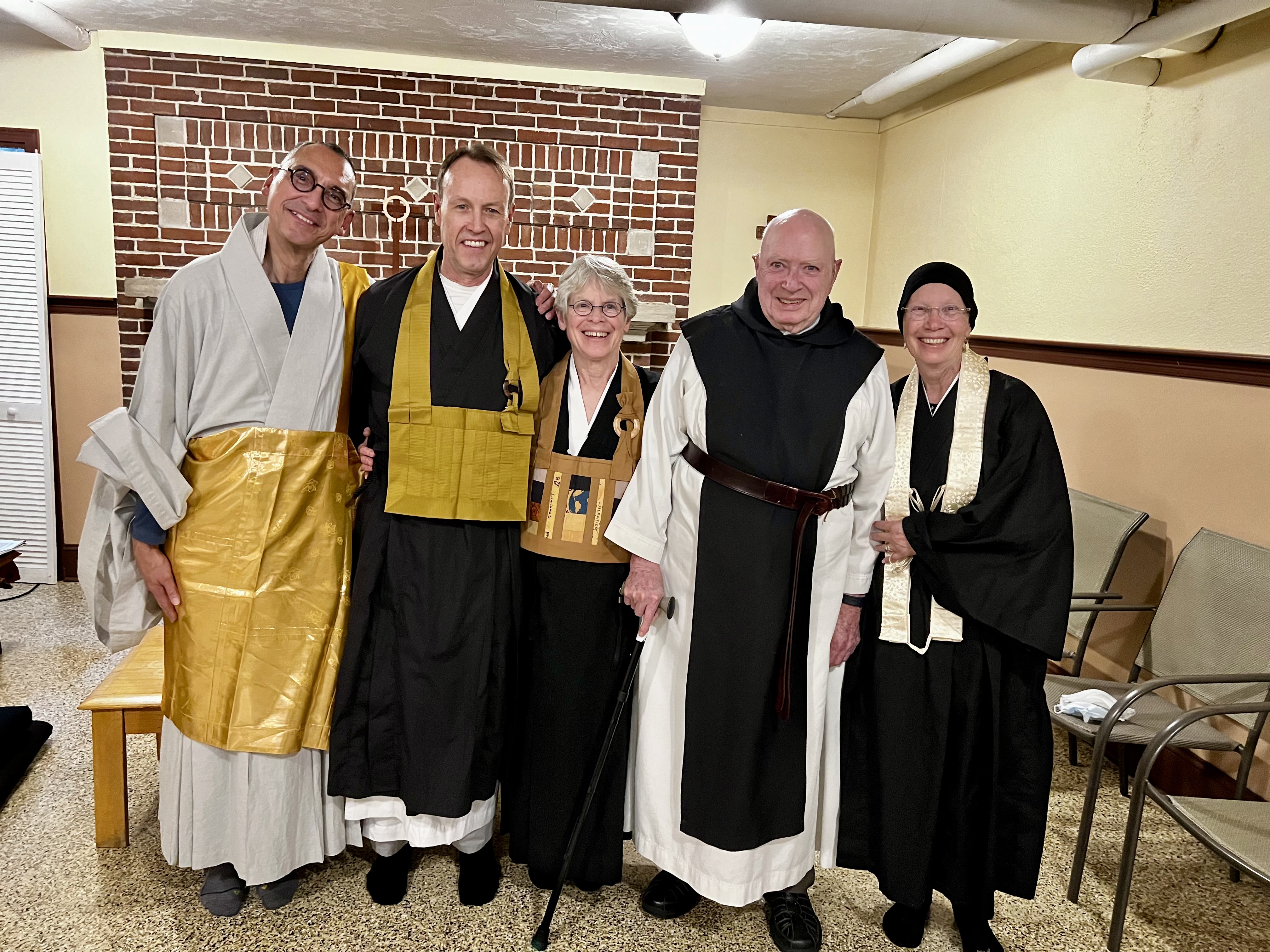
The Wheels Have Come Off

I gave this talk on November 2, 2023.

This is Case 10 in The Gateless Gate and its verse:

The priest Yuean (Geban) said to a monk, “Xizhong (Keichu) made a hundred carts.  If you take off both wheels and the axle, what would be vividly apparent?”

The Verse

Where the wheel revolves,

Even a master cannot follow it;

The four cardinal half-points, above, below, 

North, south, east, west.

The prominent Vajrayana (Tibetan) Buddhist teacher Pema Chodron has a popular book titled When Things Fall Apart.  I’m almost certain I read it decades ago, but it’s been so long I honestly can’t recall, much less remember what the book says if I did read it.  I suppose this proves her point:  Things truly do fall apart, like our memories.  

Presently it seems like the world is falling apart.  Wars in Europe and the Middle East are inflaming conflicts here that, so far, are mostly rhetorical.  Let’s hope they stay mostly rhetorical.  January 6th, awful as it was, gave us just a glimpse of how bad things really could get.  Then there is a climate crisis, a teen mental health crisis, an opioid epidemic, global recession fears, migration crises, mass shootings . . . I could go on.  There is always good news, and I suppose each era brings convulsions of some sort, but still it feels like the wheels may have come off the cart for good this time, and the axle with them.

It’s tempting to make this a talk about impermanence.  That’s one too-obvious Dharma point to make.  Things are always falling apart in a sense.  And, of course, there are always highs and lows; no highs without lows; and, viewed from the perspective of the Absolute, ultimately no highs or lows.  True as all these insights may be, they don’t offer much reassurance or other forms of support when things are especially bleak.

What else is there to say in times like these?  And what to do?  It shouldn’t be surprising that we may feel disoriented and uncertain, perhaps even completely lost, when things seem to be falling apart all around us, inside us, or both.

Our practice teaches to and helps us meet experience, whatever it is.  Not to separate from our experience, outside or inside—and there isn’t really a separate outside and inside.  Just this.

One image that comes to mind for me right now is standing in front of one of those maps we find dispersed around cities or shopping malls with an arrow pointing to the spot where I’m standing.  “You are here,” it says.

At times like this I feel the need to acknowledge that things are a mess and I am right here in it, rather than looking away or sugar-coating a bad situation.  Our practice can help us orient and stabilize ourselves even in turbulent times, and acknowledging the turbulence seems like a sane way to begin to find our balance.  I find just connecting to experience—noting and acknowledging what seems broken, without minimizing or amplifying it—can be a helpful place to start.

Then what?  Well, I suppose it depends.   Our practices also helps us to be less reactive, or more appropriately reactive; to sense and respond to what the situation requires.  The situation itself is the map, suggesting where to go next and how to get there.  Maybe we put the wheels and axle back on the cart.  Or we pull the cart like a sled.  Or we build a new cart.  Or we just pause; wait; leave space; do nothing for now. Maybe a cart is not what we’ll need going forward.

Yunmen’s verse accompanying this koan is lovely and wise, as ever:

Where the wheel revolves,

Even a master cannot follow it;

The four cardinal half-points, above, below, 

North, south, east, west.

The master can’t follow the cart—this very being-time, that is—because she’s right here with it, in it, as it.  We are part and parcel of our experience; part of this whole world that’s on fire.  We don’t control all that’s arising in our presence, let alone on other continents, but we often can influence our own and other’s experience at least weakly, and sometimes even strongly.  We also have some agency over our response to what’s arising—to direct our arising response to what’s arising around and within us—or at least the potential to develop some agency.  Practice can help us develop more agency.  

I’m not just talking about meditation practice.  I’m talking about all of it.  Bowing as we enter the Zendo.  Playing instruments and chanting.  Lighting and placing a new stick of incense after the prior one burns down.  Each of these acts is an opportunity simultaneously to meet and respond to and co-create arising experience, and to do so with reverence.  

“Realizing this, our ancestors gave reverent care to animals, birds, and all beings,” we chanted tonight.  We’re not talking about realizing this as an intellectual idea.  Realizing as making it real.  Realizing as manifesting.  Realizing as doing; as offering an appropriate response.  

The Germans have a great way of saying goodbye:  Mach’s gut.  Make it good.

The wheels are off the cart, and the axle, too.  We are here.  What will we do?  What would it mean to make it good at this time?  Can we?

Approaching Life from the Buddha Side

I gave this talk on September 7, 2023.

This is Case 1 in The Gateless Gate

A monk asked Chao-chou, “Has the dog Buddha nature or not?” 

Chao-chou said, “Mu.” 

I gave a talk in June about seeking and finding meaning.  I ended it with a quote attributed to Bodhidharma, “[T]hat which is real includes nothing worth begrudging.”  And then I said,

Nothing is excluded from the Buddha realm; nothing exists that is not Buddha.

That perspective can create some confusion with respect to questions about ethics, justice, and social action.  I’ll try to dispel that confusion in a future talk.  For now, I’ll just say that I think our capacity to respond and engage in the most skillful way possible depends greatly upon a non-conceptual awareness and experience that all is Buddha.

Tonight is that “future talk” in which I want to attempt, however inadequately, to dispel the confusion to which I referred.

So why did I begin tonight’s talk with the Mu koan?

We tend to think of the word Mu itself as the key word in this koan.  In an important sense it is, but another key word in the koan is “has,” or “have,” the verb in the monk’s question, “Does the dog have Buddha nature?”  This word is the reason Chao-chou reacts as he does.  It’s the reason he exclaimed Mu, and so the reason generations of Zen practitioners like us have been working with the Mu koan.

Erich Fromm, an important 20th century psychologist, philosopher, and social theorist and activist, distinguished between two modes of existence, having mode and being mode.

In having mode, one is consciously or unconsciously relating to other beings and things as objects and subtly or not so subtly treating them as instruments in relation to oneself and one’s objectives.  Notice that word objectives.

Ironically, this can happen even when one’s objectives seem noble, righteous, and just.  We can figure our own causes and purposes as “higher objects” to an unhealthy extent; we can idolize them.  We can elevate noble ends, whether enlightenment or saving the planet, as objects to such an extent that most other beings and things and causes are beneath our cause-objects.  We tend to think of money and drugs and fame and such as the sorts of things we are most likely to objectify in unwholesome ways, but we can do this even with things and causes we tend to regard positively. 

The monk who visits Chao-chou objectifies the dog, himself, and Buddha nature with his question about whether the dog has Buddha nature.  The question misses the oneness dimension of the interpenetrating, oneness-amidst-distinctions nature of reality.  The monk’s question implies hard ontological and existential separation.  It implies that the dog might somehow be cut off from Buddha nature.  The monk fails to see that the dog is Buddha nature and that Buddha nature, however it manifests, is not an object.  The monk is asking the question from having mode, even using the verb “to have” in his question.  This is why Chao-chou exclaims, “Mu!” 

In “being mode,” one relates to others and oneself as distinct but not separate.  Others have different attributes, capabilities, and perspectives, and different injuries and blind spots, but they’re not objects that can become instruments for pursuing one’s objectives.

Dōgen calls being mode coming at life from the Buddha side.

Our existence within having mode can be quite subtly persistent.  Having mode can continue to have us for a very long time after one begins to develop insight and even has a profound kenshō experience.  To be very clear, Zen teachers aren’t immune from this. 

One of the most subtle and confusing realms in which having mode can continue to have us is the realm of our justice projects, as I suggested a moment ago.  We can pursue good causes too righteously and with an obvious or poorly concealed hostility that objectifies and instrumentalizes others, our adversaries, and sometimes even our allies.

I think it was 1996 when I first heard the beautiful, wrenching, challenging poem Please Call Me by My True Names, which Paul, our Ino, read earlier tonight.  I believe that’s the year it was first published.  I was a student at Harvard Divinity School.  One of my professors, Diana Eck, a famous comparative religion scholar, had assigned it in a class I took.

The poet seems to be identifying equally—not seems, he clearly is identifying equally—with the starving child and the warmonger, the girl who has been raped and the rapist, the political prisoner and the corrupt politician.  As you can imagine, this poem sparked a lot of intense debate in our class.

From one perspective this poem seems to promote, or at least justify, quietism.  Contemplative religious traditions—and I do think Zen qualifies as one in a particular sense—sometimes are criticized as encouraging navel-gazing passivity in the face of injustice.

But, of course, the poet here is none other than the Vietnamese Zen teacher Thich Nhat Hanh, whose name is synonymous with Engaged Buddhism; with Buddhism’s turn toward social action.  During the Vietnam War, Thay, as he was called—Thay just means teacher, like our Soto Zen word Sensei—was one of those monks who ventured beyond the monastery to help and protect those outside it, and to protest the war.  Martin Luther King, Jr. nominated him for the Nobel Peace Prize for his humanitarian work and peace activism.

So what is going on here?  Thich Nhat Hanh clearly was not not neutral about things going on around him.  He was not living in a some relativistic, value-free zone.  He was no passive bystander to injustice.

How does someone both write this poem and speak truth to power, as he clearly did?

Perhaps the question one really should ask is how else can one speak truth to anyone with any hope of being heard and achieving lasting, positive change?  With any hope of dampening flames, or even extinguishing the fire, as opposed to fighting with flames of one’s own that incinerate what they touch? 

Through his writing, activism, and other activities, Thich Nhat Hanh provided us with one remarkably positive example of how to approach injustice “from the Buddha side,” as Dōgen put it.  From the perspective of oneness, of wholeness, of integration, of nonseparation.  He was channeling the Buddha’s words and example, as expressed in *An Unending Truth, which Paul also read earlier.  Thich Nhat Hanh’s poem, read in the light of his life work, is a profound expression of Buddha nature in its most mature and compassionate presentation.

Martin Luther King himself struggled mightily with questions about means and ends as he advocated for racial justice.  Even as his civil rights activism became increasingly more assertive toward the end of his tragically-shortened life, love for others—not least of all those he sought to influence—remained his guiding principle.**  King didn’t regard or treat those he sought to influence, including those who fought to maintain the status quo or who embraced his vision but wanted him to be less assertive, as objects.  His flame illuminated, first and foremost, and, yes, at times, it also generated some heat.  But it did not scorch, let alone incinerate, what it touched.  

King understood that means and ends are not separate.  He understood the means are ends.  He strived to avoid undue harm as he worked to address specific harms.  He engaged in activism from being mode, not having mode.

Even in the later, more assertive stages of his work as an activist, King continued to seek consensual outcomes.  That remained his prime and ultimate goal.  Even though his activism clearly exposed how many white people still regarded and treated black people as objects, he knew that treating those white people as objects would neither change hearts and minds nor promote any form of lasting, positive change.  He knew two wrongs truly never make a right.

So the first koan most of us take up, which seems to point to something we’ve been missing about the nature of reality, is also very much about grounding our actions in the ground of being.  That is where our actions have their most secure moral foundation.

I hope what I’ve said tonight helps clarify why I said earlier that our capacity to respond and engage in the most skillful way possible depends greatly upon a non-conceptual awareness and experience that all is Buddha.  It depends upon a shift from having mode to being mode.  Buddha nature is something we are, not something we have, and the depth of our embodied recognition of this greatly influences not just the moral quality of the ends we pursue, but also the moral quality of the manner in which we pursue them.

* An Unending Truth (by Shakyamuni Buddha, from the Dhammapada; tr. Thanissaro Bhikkhu; adapted, abridged) 

Phenomena are preceded by the heart, ruled by the heart, made of the heart. If you speak or act with a darkened heart, then suffering follows you—as the wheel of the cart, the track of the ox that pulls it. 

Phenomena are preceded by the heart, ruled by the heart, made of the heart. If you speak or act with a calm, bright heart, then happiness follows you, like a shadow that never leaves. 

“That person insulted me, hit me, beat me, robbed me”—for those who brood on this, hostility isn’t stilled.

“That person insulted me, hit me, beat me, robbed me” for those who don’t brood on this, hostility is stilled. 

Hostilities aren’t stilled through hostility, regardless. Hostilities are stilled through non-hostility: this is an unending truth.

Unlike those who don’t realize we’re here on the verge of perishing, those who do: their quarrels are stilled. 

** See Livingston, Alexander. 2020. Power for the Powerless: Martin Luther King, Jr.’s Late Theory of Civil Disobedience. The Journal of Politics 82(2): 700-713.

Which of Me Is the True Chi’en?

I have fallen behind on posting talks and other musings and news. Here begins a flurry of catch-up posts. This is a talk I gave on January 12, 2023.

This is an extended version of Case 35 in The Gateless Gate:

Ch’ien was the beloved only child of a merchant who one day announced he had found a good husband for her. But her cousin was her secret lover and they had known each other since childhood.

That night the cousin, distraught, set off up the yellow river, but he saw running along the banks a form in the moonlight, and it was Ch’ien, and she joined him. They settled upriver and had two children, and made a life, but she longed to see once again her home and her father. They returned and Ch’ien waited in the boat while her husband approached the house to see what sort of a reception he would get.

To her husband’s surprise, the father was delighted to see him. The young man confessed, “Ch’ien ran off with me that night, and we lived together and had two children. She is waiting in the boat, eager to see you.” And the father said, “Is this a joke? Since the time you left, she has been sick in bed, unable to arise or speak.” The father told the woman in the sick bed what he had heard, and at this, she rose to her feet and stepped out the door. At that moment, the woman from the boat herself arrived at the garden gate. The two women walked towards each other, embraced, and became one.

Wu-tsu asked a monk, “The woman Ch’ien and her spirit separated. Which is the true Ch’ien?”

Fran and I have been reflecting on and talking about shadow work and its relationship to Zen practice for over a year. (Fran initiated and has been driving this discussion, and I am grateful to her for that.) The term “shadow” is from Jungian psychology. It’s the idea that there are elements of oneself that are hidden to us but still influence what we feel, think, say, and do.

It’s important to understand that shadow elements are neither good nor bad. Anger may be a shadow element for some of us—an emotion one has difficulty discerning in oneself and expressing in functional ways—but anger is not bad. If the conscious part of oneself is cut off from anger we are more likely to behave passive-aggressively to get our needs met in relationship. As a result, we may not be very effective at meeting our needs and we may damage our relationships. Others are likely to feel manipulated or feel we’re hard to read and something of a burden. Maybe some people even will take advantage of us because we can’t let them know we’re upset by their behavior. When we do express anger, it’s likely to be expressed explosively, because angry energy has been building up for so long—most of a lifetime, perhaps. If we had been in touch with it all along, if anger were not in the shadows, it could be channeled and expressed more constructively. Anger calibrated, expressed, and channeled constructively sometimes even can help us do great things, like standing up against human rights abuses.

It’s not just feelings and impulses that we tend to think of as bad, like anger, that can be banished to the shadows. Our capacity for love, healthy pride, and courage can reside there, too, similarly limiting one’s capacity to show up as the best version of oneself.

What does all this have to do with this old Chinese fable that Wu-tsu used as a koan? I see it as encouragement to call forth our shadow elements and embrace them.

Like many good stories, there’s a central moral dilemma, and moral dilemmas often divide us—not just divide one person from another but divide one person internally. Chi’en is a young woman in a traditional, patriarchal culture in which family is a primary value and social structure. Respect for and obedience to one’s elders is a key requirement in this culture. Chi’en would have felt duty-bound to respect her father’s judgement and wishes about her marriage and obligated to stay near her birth family to care for her parents in old age. Even today, Chinese culture is relatively more relationship-based than many Western cultures. It places relatively more emphasis on group harmony and stability. The needs and preferences of individuals are important, yet they tend to be addressed in what might seem to many of us to be more nuanced (and, from our perspective, often less personally satisfying) ways within one’s web of close and distant relationships.

Add up all these factors and we can imagine that Chi’en would have felt as if she had little personal agency to declare her true love and speak and act against her father’s wishes. (In fact, I know from reading the work of a Chinese-American expert in Chinese moral philosophy that Chi’en might even have thought of her flight from home as something she had to do for her family, because remaining home as a malcontent would have made life intolerable for them.) We can imagine that a young woman like Chi’en, in this family and social context, might be conditioned to repress certain feelings and impulses that can help make us happy and whole, but which would have felt risky to express—feelings and impulses like eros and a sense of our own worth, power, and agency. But those feelings exist as shadow elements nonetheless.

Chi’en may have felt divided between the love she felt for the young man of her dreams and the obligation she felt to conform to her parents’ and culture’s expectations. She may have felt divided internally between love of her boyfriend and love of her family, including her father. Chi’en and other women then and now often have felt constrained—unjustly, or at least unfortunately, subject to other shadow elements operating at the level of a group, like one’s family or workplace, or even an entire culture—yet we can also imagine that Chi’en genuinely loved her father, even as he enacted cultural scripts that constrained her agency in keeping with prevailing social norms regarding his social role. We can feel both love and distaste for another person, and this ambivalence very often gets resolved internally by embracing one feeling and repressing the other, rather than accepting and dealing with our complex reality in a more functional way.

What is Chi’en to do with her dilemma? What does she do?

In the first chapter of this brief story, Chi’en runs away with her boyfriend and lives the life of her dreams, seemingly strong and self-possessed, showing that her capacity for love and her personal power do not reside in the shadows. (Then again, as noted above, perhaps Chi’en felt she ran away as much for her family’s benefit as for her own.) But the plot thickens when Chi’en’s heart longs for her home and father, and she returns home.

Chi’en’s husband discovers that her father is not angry, but rather is thrilled to see him. It seems there’s another Chi’en who stayed behind and has been heartbroken and bedridden ever since her father told her about the marriage he had arranged and Chi’en’s true love ran away.

Were Chi’en’s passion and personal power residing in the shadows after all? Did the man her father introduced sense that she had given her heart to someone else and decide not to marry her? Did a despondent Chi’en then withdraw from life, paralyzed?

Which life did Chi’en really live? When we ask the question that way, the story provides no answer. This is myth and allegory. Chi’en’s physical body didn’t really duplicate itself, with each double going in different directions to live different lives.

But Wu-tsu doesn’t ask the monk which life Chi’en really lived. He asks, “Which is the true Chi’en?”

If most good stories have a central moral dilemma, most also have a good twist at the end. This isn’t just a good story; it’s a great story. There are two twists at the end. The first twist is that one Chi’en returns after many years to encounter another. The second is that the bedridden Chi’en, who had been longing for her lover all these years, gets up and walks right past him. She does not immediately embrace the man for whom she has been longing. Instead, she embraces herself, and the two Chi’ens become one. She really can’t love her husband or her father fully and well until she can love all the parts of herself, healing her internal divide.

I see this koan as an allegory about the necessity of making self-integration, or atonement within oneself (at-one-ment), an important feature of what it is to be a Zen practitioner. When those aspects of ourselves that are hidden are coaxed out of the shadows and embraced, we become one. We can’t consciously be one with that which we don’t (yet) see in ourselves. We can’t be our true selves, or at least our best selves, if we don’t fully know ourselves. And the parts we refuse to know will assert themselves somehow if we don’t see and embrace them, and only to ill-effect, perhaps even causing grave harm.

We can’t be whole personally if we don’t peer into the shadows and invite what resides there to come forth, and we can’t be whole collectively either. We don’t know what happens after the two Chi’ens merge, but we’re left with this sense that the relationships among the three central characters in this story—Chi’en, the man she loves, and her father—now are on a better trajectory. You also get the sense that the father and husband have grown and perhaps glimpsed and embraced their own shadow elements, in turn making it easier for Chi’en to greet and integrate hers. Her father seems to have liberated tenderness, compassion, and self-confidence from the shadows. It must have taken all three to accept how his conformity to convention had injured his daughter and so to welcome her true love when he returned.

While I see this koan as evidence that we are encouraged to seek self-integration and at-one-ment, I don’t think Zen traditionally has offered all the tools we need to do that work. In fact, it’s possible to use our practice as a defense—to engage in what’s sometimes called “spiritual bypassing,” which is turning to meditation and spiritual practice to avoid uncomfortable emotions and experiences, much like one might turn to alcohol or gambling. I want to be quick to add that meditation, koan work, and other elements of our practice can really help us discover and integrate what’s hidden. They can help prepare the ground for and can positively reinforce modern shadow work practices. And it’s not just Zen practitioners who sometimes become curious about and explore those other practices. Psychologists have become quite curious about Zen and are exploring it and integrating it into their practices.

We’ll have more to say about Zen and shadow work in the coming weeks and months. We want to spark a broader dialogue about it and create elective opportunities to integrate shadow work into our practice.

The true Chi’en, the true you and me, is the whole person, ever more intimately known to herself. Zen practice really must be a practice—a set of practices—for ever increasing at-one-ment.

Remembering (and Missing) Herb Kelman

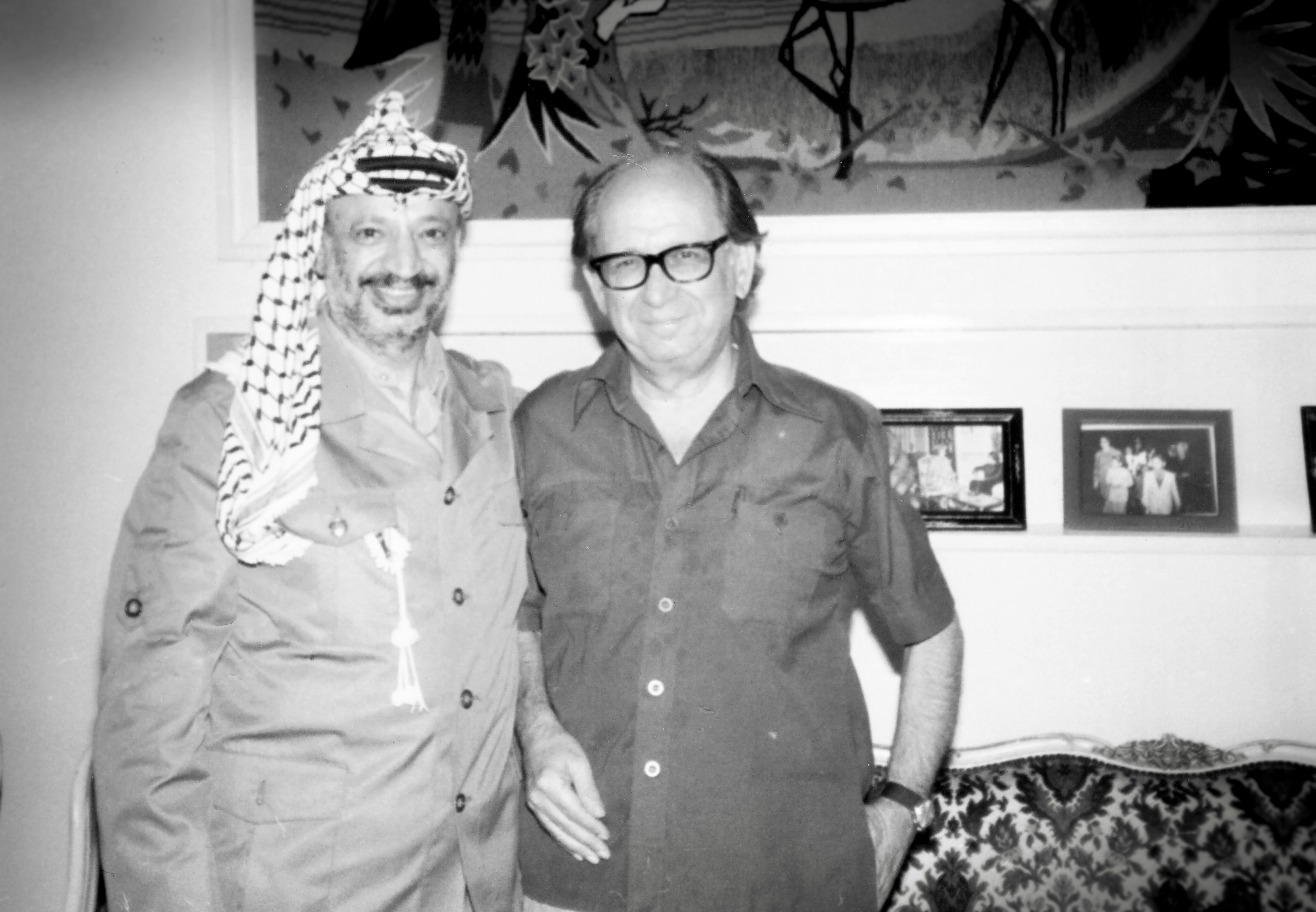
I spent last week in Washington, D.C., in meetings with a group of Israeli and Palestinian peacemakers colleagues and I have accompanied and worked with for nearly a decade. This initiative is convened by the Herbert C. Kelman Institute for Interactive Conflict Transformation in Vienna, Austria. The Kelman Institute was named in honor of one of my main mentors in the field of negotiation and conflict resolution, Herb Kelman, who fled Vienna with his family when he was 11 following Kristallnacht. I was thinking about Herb a lot and missing him last week. Herb died in 2022, just before his 94th birthday. Several of his colleagues and students eulogized him at a memorial service in September 2022. I’ve posted my remarks below, as well as a few photos of Herb. Donna Hicks, Dan Shapiro, and I later offered tributes to Herb as a scholar-practitioner through the seminar on international conflict analysis and resolution named in his honor at the Program on Negotiation at Harvard Law School. I wanted to post something about Herb here, in part, because I posted a tribute to another of my mentors, Roger Fisher, in 2012 after he passed.

Many of us here today participated in a festschrift for Herb on the Harvard campus about 20 years ago. Reflecting on his career up to that point, Herb said something like, “Others think big.  I always have thought small.  I want to start thinking bigger.”

As I recall, Herb went on to explain that he had long focused on understanding individuals—our attitudes and actions and how to influence individuals positively.  He then applied what he had learned about individual perspective change to dyads and small groups, perhaps most notably through development of the Interactive Problem-Solving approach to conflict resolution and his work on morally blind obedience to authority.

This focus on individuals and small groups always was aimed at broader societal and global change, of course, but now Herb apparently was thinking about possible systemic interventions at a very large scale.  He mused about work he might do with the United Nations—in retirement, nonetheless!  I don’t know precisely what he might have been thinking then, but I don’t believe he ultimately changed directions in a major way.  Herb mostly continued to think and do “small” as he apparently defined it.  Like others here, I teach, write, and practice in the conflict resolution field, and I’m constantly in awe of the major impact Herb’s “thinking small” has had on our field and in the world.

As I was preparing my own remarks for that festschrift I had a conversation with Herb in which he said something else that has stuck with me.  I had been asked to comment on two very different presentations, one by Shoshana Zubhoff at Harvard Business School, who would be speaking about what she calls organizational narcissism, and the other by Luc Reychler of Catholic University Leuven in Belgium, who would be speaking about the idea of peace architecture.  I turned to Herb for suggestions about how to contend with two such diverse topics, particularly since my own work, on religion, conflict, and peace and what I now call negotiating across worldviews, differs so much from theirs.  Herb had no suggestions, only general words of encouragement, but he told me in passing how incredibly happy and proud he felt because those he mentored closely were doing such varied things.

And so I submit to you that the close mentoring of so many of us that Herb did over his long career is another way in which Herb focused on the individual and thought and did “small” with huge impact.  Herb’s mentees are making major contributions in fields of scholarship and practice as diverse as business, child advocacy, conflict resolution, education, human rights, genocide studies, international relations, law, medicine, peace studies, poverty reduction, psychology, public health, social work—the list goes on and on.

Herb said many other things over the years that will stick with me but let me share just one more.  It’s the last thing he said the last time I saw him while he still was able to communicate.  Donna and I were visiting about three weeks before Herb passed away, and he was in bad shape.  We mostly just sat at Herb’s bedside holding his hand, because his breathing and speech were so labored.  As we prepared to leave I asked Herb, “What do you want us to know?”  He responded to my question with another question: “What will it take to bring more people to love?” Herb said.

I think that biggest-of-all questions is what animated the “thinking small” work to which Herb devoted his life.  I likewise see this universal question propelling the very particular work of so many of his mentees.

And it’s not just us.

I keep coming across Herb’s name, and ideas, and evidence of his influence in unlikely places, like Michael Pollan’s book How to Change Your Mind: What the New Science of Psychedelics Teaches Us About Consciousness, Dying, Addiction, Depression, and Transcendence.  (Most of us know about Herb’s little run-in with Richard Alpert (later known as Ram Dass) and Timothy Leary, who he thought should take a more responsible approach to human subject research, shall we say.)  I’m a Zen practitioner, so you can imagine how surprised I was to see Herb’s work cited in Robert Wright’s book, Why Buddhism Is True: The Science and Philosophy of Meditation and Enlightenment.  Really?!  Herb’s work is discussed in a book about Buddhism?  Unbelievable.

In Zen, we say our teachers don’t die, they just go into hiding.

Everywhere.

In and through each of us and so many others, Herb is hiding in plain sight—everywhere.

Insight

This is the text of a talk I gave on June 8, 2023.

This is Case 20 in The Book of Equanimity:

 Master Jizo asked Hogen, “Where have you come from?”

“I pilgrimage aimlessly,” replied Hogen.

“What is the matter of your pilgrimage?” asked Jizo.

“I don’t know,” replied Hogen.

“Not knowing is the most intimate,” replied Jizo.

At that, Hogen experienced great enlightenment.

Jizo’s final remark in this koan, “not knowing is the most intimate,” is among the most profound and repeated lines in the Zen tradition, but I want to focus on the very last line of this koan instead.

This past Saturday (June 3rd) I gave a talk about seeking and finding meaning.  In that talk I said many of us come to practice because things seem out of joint; disintegrated.  Humpty Dumpty is cracking, or maybe already in pieces.  We’ve made meaning when all the pieces of oneself and all the pieces of the world we inhabit seem to cohere in a new way.  We’re seeking integration; a sense of wholeness.  The knowledge we seek isn’t a philosophical, theological, or scientific formulation, but the experience of knowing oneself and all else as interlaced threads of the vast robe of liberation itself.

Many koans end like the one I read a moment ago: “At that, so-and-so experienced great enlightenment.”  Reading this, we might assume the monk’s search for coherence and cohesion is over in a flash.  If this is what we expect for ourselves—that we’ll have a flash of insight that puts our heart-mind to rest once and for all—we may be disappointed.

Many Zen practitioners do have a powerful kensho experience at some point.  These experiences absolutely can, and they very often do, leave one with an abiding sense that one is not separate from it all.  Many other Zen practitioners don’t have such a singular experience, however, but instead have many less dramatic moments of non-dual insight, like a sense of the oneness of it all while watching steam dance upward from a teacup or watching the play of light streaming through a window.  Whatever our experience, the spark that brought us to practice is bursting into a flame.

But old ways of knowing and seeing, and the old habits of mind and heart that accompany them, tend to die hard.  Zen practice is a context that tests and challenges the boundaries of the ways of knowing and being we have brought to it.  It sometimes pierces, sometimes simply sidesteps our preexisting mental frames.  Chief among these mental frames is our sense of self; of who we are and how we exist. 

The moments of insight we experience as Zen practitioners are disorienting to that sense of self, with its overly rigid boundaries and its containment, command, and control projects.  Early in our practice, our self-sense may react to new insight by trying to co-opt it; to contain and control it as something “I” now “have.”  The ever-quotable Tibetan teacher Chogyam Trungpa was fond of saying that the ego wants to be present at its own funeral.  Our insight experiences can be held in a way that’s self-referential; regarded as personal accomplishments, and so indicative of spiritual pride.

If and as we continue to practice, however, if and as we continue to nurture and fuel the flame insight experiences ignite, that rigidly bounded sense of self ultimately may be consumed by the flame and turned to ash.  Other practices, like therapy, can complement and support our practice, and vice versa (but should not be confused with it).  

Ash isn’t nothing; it isn’t mere refuse.  It mixes with the the soil that gives life.  It scatters and rides the wind in the Ten Directions.  Now we truly identify, mingle with, nourish and are nourished by all that arises.

Mature, seasoned insight is the experience of feeling centered in a universe with infinite centers.  Now we know and experience ourselves and all else as interlaced threads of the vast robe of liberation itself.  No containment necessary, or even possible.

The monk in our koan dropped his guard for a moment.  He became vulnerable; exposed.  He had been wandering around with an intense sense of purpose, but he realized he had no idea what he was looking for or even why he felt something was missing in the first place.  To his surprise, Jizo validates his not knowing; encourages him to give up the self-referential containment, command, and control project that his spiritual journey had become, and simply live into the mystery. 

This monk, like so many of us, set foot on a narrow path thickly overgrown with questions.  With this moment of initial insight, the path begins to widen, feel less vexed and more spacious.  Maybe the path eventually will disappear into a vast clearing.  Lost in it, we see nothing but the horizon in every direction.  And each blade of grass at our feet.

In-sight.  Seeing from within, not seeking a way out.  

What is this vast clearing in which we find ourselves?  Home, warm and intimate.

I think Jizo is encouraging the monk to rest his weary legs, mind, and heart.  I think the monk is on the cusp of accepting that practice is the point of practice; that his life is the point of his life.  Jizo is affirming that recognition.            

Jizo is telling the monk that he’d might as well make himself at home.

The Finger is the Moon

I gave this talk at our Full Moon Zen sunrise sit on Friday, August 25, 2023. I’ve posted a recording of it below.

This is a poem by Ryōkan, a Zen hermit who lived in the 19th century:

Relying upon a finger, we see the moon
Relying upon the moon, we understand the finger.
Moon and finger
Are neither the same nor different.
This expedient analogy is for guiding beginners.
Having seen reality as it is,
There is neither moon nor finger.

The famous parable about not mistaking the finger pointing at the moon for the moon itself comes from the early Buddhist sutras (the Laṅkāvatāra Sūtra and the Śuraṅgama Sūtra). The Buddha is explaining to Ananda that his teachings are pointers to mind, or absolute reality, and are not to be mistaken with that to which they’re pointing. He’s saying, “I use words and concepts as a skillful means to an end that’s beyond words and concepts. Don’t get lost in the weeds.”

The Buddha wants to help people realize and center themselves in the reality of nonseparation as their lived experience, not merely as an idea. He uses this metaphor to raise awareness of our tendency to over-intellectualize in the context of spiritual practice—to get tangled up in concepts—much as we do in other contexts.

The finger and moon metaphor is one of those teachings that later helps spawn the idea that Zen involves a special transmission beyond words and scriptures. And that idea is a close cousin of the Mahayana Buddhist notion that there are two truths; that there’s a relative reality and an Absolute reality, as we express that idea in the Zen tradition.

As we know, of course, Zen also insists that these two truths are one truth. The relative and the Absolute are one and the same reality. We begin our journeys thinking there must be something more than relative reality, but we discover that something more as the palm of our hand. We discover that something more through a shift in our perspective about ordinary experience, and now we know the seeming two truths as one truth.

Like the Buddha, Dōgen, the 13th century founder of our Soto Zen stream, also was concerned about how his contemporaries seemed to get lost in words and ideas. He was so troubled by this that, after years studying with the leading Buddhist teachers in Japan in that era, he traveled to China in search of an authentic teacher.

Dōgen spent years in China interacting with different teachers but was similarly disappointed with most of them. He nearly gave up and returned home, but finally met Rujing who, for Dōgen, embodied the teachings, rather than merely trafficking in ideas. Dōgen had a powerful awakening during his time with Rujing.

Paradoxically, Dōgen’s awakening was a portal for him into a new relationship with words and letters. He returned to Japan and wrote prolifically, both prose and poetry. His use of language is so creative, it’s sometimes hard to tell which is which. More than any Buddhist teacher before him—at least among those who left an extensive record—Dōgen understood and uttered words simultaneously as skillful means and as the thing itself.

Anyone who encounters his words begins to experience the finger as the moon. For example, Dōgen famously writes that:

“Studying the Buddha way is studying oneself. Studying oneself is forgetting oneself. Forgetting oneself is being enlightened by all things. Being enlightened by all things is to shed the body-mind of oneself, and those of others. No trace of enlightenment remains, and this traceless enlightenment continues endlessly.”

The last line of Ryōkan’s poem, [t]here is neither moon nor finger,” can be mistaken as a negation of both moon and finger. It’s really an affirmation of both—and of their complete unity. They’re not separate things. They’re inseparable features of this seamless, boundless realm. Don’t slander them by denying their existence, but don’t slander them by saying they’re solid, fixed, separate things either.

So let’s take our words seriously. The words we chant are it. The words in the emails we’ll write later today are it. The words we speak to a loved one when we’re frustrated are it. The Absolute, manifest. The ultimately real is just this. Our experience is ultimately real, so let’s “mach’s gut”—make it good, as the Germans say.

No hands but these hands. No voice but our voices. No words but our words.

Our words are deeds on which we stand. We are the beneficiaries of our words.


Seeking and Finding Meaning

I gave this talk on June 3, 2023. A recording follows the text.

This is Case 12 in the Blue Cliff Record:

A monk asked Tung Shan, “What is Buddha?”

Tung Shan said, “Three pounds of hemp.”

This koan, and others like it, seems to express many of the qualities for which the Zen tradition is famous, or perhaps infamous, among them obscurity, irreverence, and paradox.

A Zen practitioner coming to a teacher with a question like this is just trying to do what human beings try to do: make meaning. The late developmental psychologist William Perry said, “Organisms organize, and the human organism organizes meaning.” We are meaning-makers.

The question, “What is Buddha?” can be reformulated as, “What’s it all about?”  And also, “Who or what am I?”  And also, “How do I fit in?”  Needless to say, if we’re asking questions like this, we’re not quite sure what it’s all about, or who or what we are, or how we fit in.  This sort of uncertainty, or not knowing, can feel intensely, existentially uncomfortable.  We want relief from that discomfort, and we start seeking relief by seeking conceptual answers to questions like, “What is Buddha?”

We’ve made meaning, or made sense, when everything seems to fit together; to cohere.  We’re seeking integration; a sense of wholeness and integrity; coherence.  We feel disjointed “inside” and the world seems disjointed “outside.”  We want all the parts “inside” us to fit together harmoniously; we want all that’s “outside” us to fit together harmoniously; and we want “inside” and “outside” to fit together harmoniously, too.

Tung Shan (aka Dongshan) was the ninth century Chinese teacher to whom we trace the start of the Soto school of Zen in which we practice.  He was a famous teacher during the Tang Dynasty, the heyday of Zen in China.  Some of our most important Zen texts are attributed to him.  Hundreds of years later, Dharma heirs of Tung Shan developed koan practice based, in part, upon recorded encounters between Tung Shan and the monks he taught—stories like the one with which I opened this talk.

On first blush, Tung Shan’s response to the monk’s question—“What is Buddha?”—may indeed seem obscure, irreverent, and paradoxical.  Hearing Tung Shan’s response in this koan for the first time, many of us may think, “Huh?  The monk is asking a clear question about Buddha nature.  Why does Tung Shan respond so obscurely by referring to three pounds of hemp?  The monk is asking a serious question about a sacred matter.  Why does Tung Shan respond so irreverently, seemingly dismissing the monk’s question and referring to something so mundane.  The monk is asking a straightforward question.  Tung Shan’s response seems like a joke or a riddle, not a sincere answer.”

Tung Shan indeed is responding sincerely.  His response is not obscure, irreverent, or paradoxical.  To the contrary, it is as clear, serious, and straightforward as the monk’s question.

If Tung Shan’s response initially seems obscure, irreverent, and paradoxical to us, that’s because we’re expecting a different sort of answer.  We’re looking for, and think we are inquiring about, something extraordinary; something extra-ordinary.  Tung Shan instead points to something completely ordinary and concrete, and so his response seems wrong or intentionally confounding.

Hemp was used to make paper, cloth, and rope, among other everyday items, in ancient China.  Tung Shan’s monastery and others like it were major cites of literary production.  There would have been 30 or even 300 pounds of hemp at his monastery at any given time, used to create paper on which monks transcribed sutras, the robes the monks wore, and other everyday items.  Hemp would have been as ordinary as rice or water.

Tung Shan is telling the monk in the simplest, most straightforward way possible that Buddha is right here.  Teacup Buddha.  Morning dew Buddha.  Temple dog Buddha.  Questioning monk Buddha.

Tung Shan is telling the monk that the meaning he is seeking is in plain sight.  That the robe he is wearing, and also what’s inside it, is the very robe of liberation.  He is telling the monk that the answer to his question is not an esoteric or abstract idea, but this very life; each and every feature of it.  He’s saying that the knowledge we seek isn’t a philosophical or theological formulation, but the experience of knowing oneself and all else as interlaced threads of this vast robe of liberation.

Nothing could be less obscure, more reverent, or less puzzling than the way of being to which Tung Shan is pointing.  We simply need to welcome and live into it.  Zen practice is a context and path for living into this truth.  Our resistance to it—our desire to contain and control reality—tends to decrease if and as we walk the path.  We ultimately discover ourselves and all else as the meaning we have sought.  It was ready-made; already waiting here for us, as us.

Could the lint on my cushion really be Buddha?  Could my life really be a Buddha’s life?  As Bodhidharma, the first great Zen ancestor, wrote, “that which is real includes nothing worth begrudging.”  Nothing is excluded from the Buddha realm; nothing exists that is not Buddha.

That perspective can create some confusion with respect to questions about ethics, justice, and social action.  I’ll try to dispel that confusion in a future talk.  For now, I’ll just say that I think our capacity to respond and engage in the most skillful way possible depends greatly upon a non-conceptual awareness and experience that all is Buddha.

Thanks for listening. As always, our dialogue is what I most look forward to about our time together.

Emptying our Teacups and Teachers

I gave this talk on April 22, 2023. A recording follows the text.

Nan-in, a Japanese master during the Meiji era (1868-1912), received a university professor who came to inquire about Zen.

Nan-in served tea. He poured his visitor’s cup full, and then kept on pouring.
The professor watched the overflow until he no longer could restrain himself. It is overfull. No more will go in!

Like this cup,” Nan-in said, you are full of your own opinions and speculations. How can I show you Zen unless you first empty your cup?

As I read a text like this for the first time, my mind usually begins doing its sorting thing, quite naturally and imperceptibly. It immediately notes key words, like “teacher,” “professor,” “inquire,” and “Zen” and the standard concepts they represent. It makes standard associations among these concepts and other features of the text. Finally, it reaches a conclusion in light of these associations, in the form of the major point the text seems to convey.

Our everyday minds rely heavily on default settings and heuristics. The mind sifts phenomena according to categorizes and patterns. Actually, it’s not just passively perceiving and interpreting our experience. It’s playing an active role in constructing it. Our everyday minds shape reality, literally filling in “data gaps” with what we expect to perceive and then responding to that construction as if it were a solid object wholly external to us.

Most of us likely think, for example, that the route from our eyes to our brain is one-way; that our eyes register comprehensive visual data and send it to the brain, which then combines it with other sense data and memories to reach a conclusion. That’s not true. Most of the signals in our visual system travel the other way. The brain is telling our eyes what to see.

This functioning of everyday mind serves us well for many purposes much of the time. Returning to our text, there is nothing wrong with seeking insight and utility in the point the teacher-character in a story like this seems to be making—and arriving at the standard conclusion about it. I do think the teacher-character in this story (and in many other Zen stories) is making an insightful and useful point.

Yet it’s important to be aware of how our everyday mind works, because meeting constructs—meeting our pre-existing ideas about anything or anyone—is not meeting the thing itself. In reality, there are no things to meet. There is only meeting and the fleeting opportunity to shape experience.

For some time now, it’s been my practice to keep sitting with a text a bit longer—days or weeks, if I have time—noting my early cognitions, but not latching onto them immediately as the only take-aways, or even the main ones. When I can do this, a kind of softening often occurs, and a previously unseen opening may appear, offering something new; some fresh way of experiencing the story. The characters, and happenings, and even the seemingly obvious point of the story often become less solid, more permeable and yielding, more like the cells in a living organism and the mutually supportive interchange between them; or like living things in a thriving ecosystem. The seemingly solid elements of the story begin to decompose.

As I sat with this story about the professor who calls on Nan-in for a week or so before sesshin, my attention eventually settled on, and I began to center in, the tea and the teacup. What is this tea? What is the experience of tea? What is this teacup? What is the experience of teacup?

The tea flows from the spout of the teapot, crashing into the bottom of the teacup, rushing up and tickling its sides. The tea settles in the cup as it fills, but soon it’s escaping over its edges. The teacup seems so solid and still as the tea it can’t grasp or ultimately contain keeps flowing.

But the teacup, solid as it seems, actually is no more graspable or containable than the tea; the tea no less solid and still than the teacup. Both comprised of elements. (Imponderable elements. Like the word Zen, I don’t really know what the word element means as I use it. Does anyone?) Elements in constant flux, some, like those posing as teacup, just appearing to us to stand still. All these elements, part of this vast, flowing tea-river we inhabit.

Tea and teacup—at once constructs and ultimately real. Visitor, teacher, and teaching, too. Teacher is not only a construct but also a real role that comes with real responsibilities and real opportunities to be usefully present to others. Teacups really make it easier to drink tea.

My first readings of the story render the characters in it as little figurines in fixed positions, with fixed positions. A visitor who is too full of herself and her own ideas. A teacher who who offers a wise and insightful teaching, cleverly communicated. Or, looking at it from a perspective 180 degrees opposed to that, a teacher who is a bit too clever and theatrical and a visitor who could be forgiven for finding little value in this encounter.

It’s not that my first take on a story like the one we’re exploring here is wrong. It’s true that Zen and other contemplative practices invite us to empty our teacups of some of our ideas to make room for the intimate experience of life itself. It’s just that my first interpretation is just that, an interpretation. Even our best ideas—including ideas about emptying our teacups, and about emptying teachers and teachings, and about emptying our stories—are still just ideas, no matter how insightful they are or how much they seem to improve upon earlier ideas.

We can and should cultivate and share new ideas, about Zen practice and everything else. We can and should discard old ideas that no longer suit our purposes for more useful ones. And we also should remain alert to our tendency to reify and fetishize ideas, even our new and improved ones. We can refill our cup after we think we’ve emptied it, making it too full again. In fact, we tend to do this repeatedly.

Always there is more to a story than meets the eye; more to be seen and felt if we can enter the story and abide in and remain present to all that’s emerging and yet-to-emerge. Always more of the whole to be encountered and integrated. That “more” often includes what we have abandoned; often we must rediscover, refigure, and reclaim what we’ve rejected. We must transcend it and then (re)include it, as the philosopher Ken Wilber says.

There’s always more to this, because this is not an idea. If we think the story has ended, and that we’ve now got the point—if the space we think we’ve emptied becomes too full of something else, even, perhaps especially, “Zen”—we’re missing the point.

And the tea.

May our cups runneth over.

Kyōgen’s “Man Up a Tree”: A Jukai Reflection on Lineage and the Precepts

I gave this talk on April 8, 2023, as part of a Zazenkai preceding a Jukai ceremony in which three Zen students received the Zen Bodhisattva Precepts.

This is Case 5 in The Gateless Gate:

Master Kyōgen said, “It’s like a man up a tree, hanging from a branch by his mouth; his hands cannot grasp a branch, his feet won’t reach a bough. Suppose there is another person under the tree who asks him, “What is the meaning of Boddhidharma’s coming from the west?” If he does not respond, he goes against the wish of the questioner. If he answers, he will lose his life. At such time, how should he respond?

This is one of those koans that has stuck with me over the years. The image of this man up a tree is at once so odd and so relatable. He’s clenching a limb with his teeth, holding onto his life precariously. He must be panicked, painfully aware this is going to end poorly no matter what, even before someone else comes along seeking help.

How much longer could he hold on? Thirty seconds, maybe? A minute? Still, he hesitates to let go of the tree to face the inevitable; hesitates to respond to another soul appealing to him as a Bodhisattva.

I remember feeling so pained for the man up the tree the first time I read this koan. Anguished. I feel for him still. Of course, we are the person up the tree. Which of us hasn’t been stuck before, and felt it?

We’re going to celebrate Jukai this afternoon. Three of our friends here today—Eliot, Kent, and Rebecca—will take up the Bodhisattva Precepts, formally dedicating themselves to the Zen way of life.

This koan is perfect for today, because Jukai also is about a certain tree. During Jukai one receives a scroll tracing a lineage of Zen ancestors from Shakyamuni Buddha to oneself. This lineage traditionally is understood as a family tree—a new family tree. Many Asian cultures, including those of China and Japan, which sequentially formed the Zen tradition as we initially received it, place great emphasis on ancestry—upon one’s identification with and location within a community conceptualized in terms of kinship through time.

It can be a bit hard for us Westerners to fully imbibe what this means to many Asians even today, in all its complex valences that entail both benefit and burden. But for many this sense of lineage is deeply felt. Many people in parts of Asia still deeply appreciate and honor this attention to lineage. That’s not to say this strong identification with ancestral lineage doesn’t feel limiting and otherwise burdensome at times. For example, tensions between the old and the new, and between the individual and the community, are prominent themes in Chinese poetry, prose, and proverb throughout history.

In Jukai, as in rituals in other traditions in which one affirms one’s commitment to an intentional way of life, one receives a new name. This happened to me—and, I think, some others in this room—when I participated in the Catholic rite of Confirmation many years ago. Today, Eliot, Kent, and Rebecca each will receive a Dharma name. In Japan to this day, Zen monks, and likely also some non-monastics, actually change their name in the civil legal records after taking the precepts. This is no small matter in that cultural context. Symbolically and practically, they’re saying they’ve jumped from one family tree to another.

How do we make sense of all this today, from our cultural perspectives and for our purposes? How can and should we think about lineage when focusing so much on ancestry seems foreign and anachronistic to us; when the traditional lineage we depict in Zen draws attention to some people to the neglect of countless others; and when some of the people depicted were disappointing (or worse) in some ways, however insightful and helpful they may have been in other ways. Viewed from one angle, our Zen tree looks pretty gnarly, even rotten or hollow in places.

The people listed on the traditional scroll our Jukai participants will receive are mostly men, and almost all of these men were monks. Eliot, Kent, and Rebecca also will receive a chart tracing the lineage of some prominent women and non-monastic ancestors as a way to begin to acknowledge and honor the fact that this tree has long been sustained by a much more diverse community of people committed to the Zen way than has been formally recognized, including people like us living ordinary lives.

Some people listed on the traditional charts, whether in my White Plum lineage or other lineages, transgressed one of more of the Ten Grave Precepts in some grave way. Some did so repeatedly.

Perhaps a bit like the man in Kyogen’s koan, we find ourselves up a tree that we discover to be gnarly and rotten or hollow in some places. We find ourselves out on a limb. What a precarious position. Should we hold on? Can we hold on? What is there to hold onto? What will we be avoiding or neglecting if we continue to hold on by our teeth?

Perhaps the best place for the man in the tree to be at this time is exactly where he’s afraid to be—on the ground. Perhaps things won’t end as he fears if he lets go of the branch on which he’s found himself, and to which he’s clinging. With a view from the ground, balanced on his own two feet, perhaps he will be able to see the whole tree more clearly; discern and appreciate the parts that seem more solid and secure; get some distance from and perspective on the parts that seem less so.

Perhaps falling from the tree branch to which one has been clinging can be more like Alice’s experience falling down a rabbit hole (much as I hesitate to use that term in this age of social media-fueled partisanship). Down the rabbit hole, Alice became larger than other things at times. If we can think of our Zen lineage tree depicted on the traditional chart as something smaller, like a bonsai tree, our perspective on it may shift.

In the art of bonsai, we both take the tree as we find it and we actively shape the tree. We need to think of our Zen tree this way. We are not only shaped by it; we can shape it; we must shape it. Even now, Zen adepts across the globe are reshaping the Zen tradition in myriad ways, opening it to people who have been excluded or marginalized, altering old forms and creating new ones.

Our sangha has been questioning the traditional forms and structures for the past few years, as well it should. We are looking at how what we’ve received has shaped us and how we want to shape this tradition and our practice within it going forward. We’re becoming more like the bonsai artist than the man up the tree.

I’d like to mix metaphors for a moment as I wrap up this talk to touch on the other primary element of Jukai, the precepts themselves. I want to relate them to lineage and, as I do, try to refigure both. Instead of thinking of lineage only, or even primarily, in the traditional way—as a line traced through a succession of formally recognized teachers—I see it more fundamentally as Indra’s Net, another Buddhist metaphor. Indra’s Net includes each of us. We’re all jewels in this net.

It’s easy—too easy—to focus on the jewels in this image, but the rope that connects the jewels to one another is equally important. In fact, in a real net, the jewels, or nodes, are literally formed with the rope. Each jewel is a meeting of beginning-less rope; each jewel is constituted by encounter.

I see the ropes in Indra’s Net as the precepts. They’re what connects us; binds us; in a very real sense, forms and constitutes us. The precepts show us how to be in right relation with one another. How to manifest together as the clear, colorful, bright, and variously shaped jewels we are.

Conceived this way, as a net, our lineage chart doesn’t trace in a single, temporal line of successive generations of teachers. The lines, or ropes, of Indra’s Net extend and crisscross in all directions through space and time, connecting each of us. Each and every node in the net is the net’s center. Many centers, none of them primary.

Many of the traditional forms we’ve inherited communicate these ideas poorly, but I choose to see them in this other way, too. This is part of the logic behind inviting people to create a personal lineage chart for Jukai. I also want to encourage anyone who has taken Jukai to have others in and beyond our sangha place a mark on the back of their rakusu, in addition to the inscription and stamp a teacher has made.

Each of us is an heir to and custodian of the gnarly, wonderful, living tree that is the Zen tradition. It needs constant shaping and tending. Let’s not relate to it like the man up the tree, clinging to it for dear life with our teeth. Let’s tend and shape it well together.